
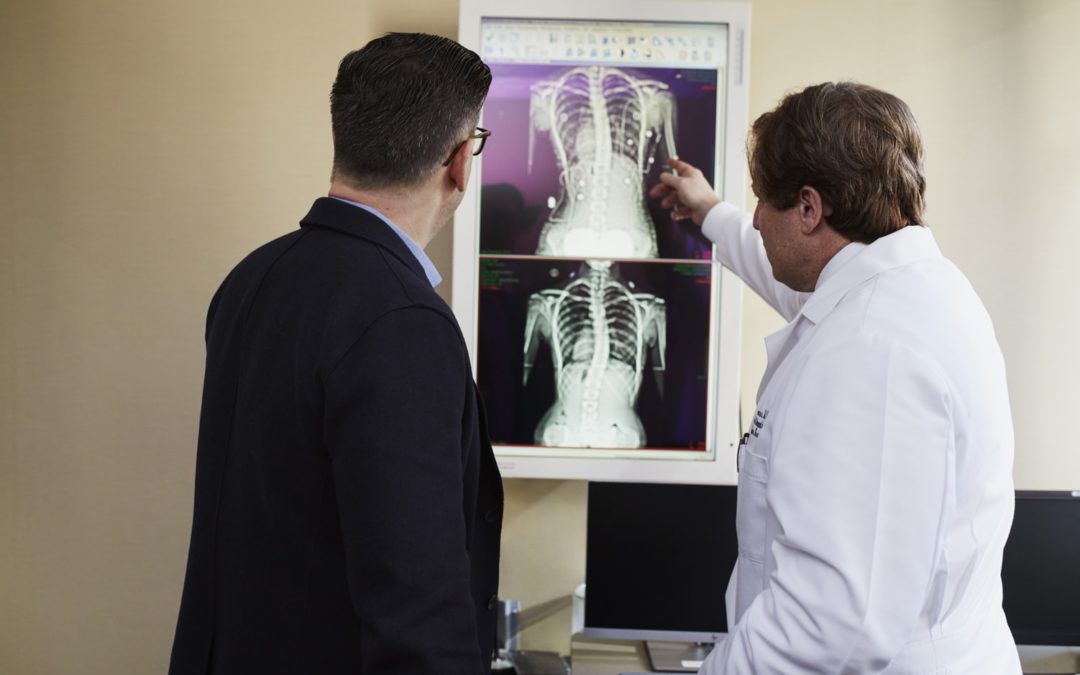
"I don't ask why patients lie, I just assume they do." This is one of the most recognizable quotes from one of the icons of medical science brought to the small screen: Dr. Gregory House. An entertainment series, yes, but one that based much of its success on extensive research to make its episodes believable. And today we are talking about medical science, in this house where we pay so much attention to healthcare (see our Studies on Competition in the field of insurance companies). Because the imminent great revolution in healthcare will not come (only) from a genius capable of identifying ailments where others cannot, but from the profound impact that digital technologies will have in anticipating even a patient's lies.
The marketing agency Digital Authority Partners has devoted an extensive article to identifying the seven key trends so far this year in this field, based on two premises: one, that the pharmaceutical and healthcare industries have lagged behind in implementing digital strategies; and two, that there are plenty of examples of the impact, whether desired or not, of new technologies such as telemedicine, medical devices with artificial intelligence (AI), and blockchain-based electronic health records. And with a priority focus: innovation, with at least five primary objectives: streamlining the work of physicians, optimizing systems, improving patient outcomes, reducing human error, and reducing costs through web and mobile experiences.
Data for more personalized management
The first of these trends identified is the increase in "on-demand" or "à la carte" care, which is not a consequence of usual healthcare patterns, but rather of the decisions made by consumers in this regard. The term "consumer" may sound confusing (and completely erratic) in an environment accustomed to free public healthcare, but we must remember that the reference market is the US, where private healthcare dominates the market; and that if we replace "consumer" with "user," the change in factors does not alter the final result: it is a question of adapting healthcare science to the habits of its market, whether or not it is guaranteed by a public system.
Consumers want everything at their convenience, at a time and place of their choosing. This approach is inherited from marketing, the discipline that has identified that in 2019, mobile web browsing statistics have exceeded the 50% threshold. As in the case of marketing, it is the obligation of healthcare companies to identify where their consumers are and reach them through the most appropriate platforms, always taking into account the increasingly continuous mobile access to all of them. These are the customer's rules, which once again expose the inseparable links between customer experience and digital transformation. With 4 billion people on the Internet... isn't it even dystopian that it is not at the forefront of medicine?
And this approach can also be seen in reverse: not "on demand" from the patient, but from the professional. It is the golden opportunity for many professionals to boost their careers by working independently for several corporations, rather than joining a single company.
When discussing medical professionals, we must not overlook a professional role of growing importance: the data scientist specializing in the medical field. This is the second major trend identified, and its objective is to identify patterns from all the information that can be gathered from sources as diverse and heterogeneous as e-commerce, financial transactions, medical records, and social media. Among the benefits of this new discipline are a reduction in medication errors, an incentive for preventive care to relieve congestion in emergency rooms, and proper management of admission processes, which would save money and reduce waiting times.
This is a challenge not for the future, but for the immediate present in the pharmaceutical industry. A better understanding of the market is the precursor to product iteration and much more effective budgets. In addition to creating a customer "persona," which results in a better experience. But it is also a vector for predicting which diseases and conditions will become major problems in the near future. Information aggregated through Big Data and other marketing sources can help healthcare companies develop healthy lifestyle recommendations for their patients, anticipate health "scares," prepare companies for certain employee events, or even when to hire temporary staff to cover common illnesses.
If a patient fell asleep today and woke up in a few years, one of the biggestshocks they would experience would probably be seeing how something that once seemed destined only for games has ended up becoming a powerful medical tool. We are talking about Virtual Reality, with countless applications for treating patients more effectively than prescribing legally available "drugs." It is a technology that is already being researched today to treat pain, anxiety, post-traumatic stress disorder, and cardiovascular accidents, as well as to motivate physical exercise. Or, on the other side of medicine, to hone the skills of professionals and students and plan highly complex surgeries. Science fiction? No. Once again: digital transformation.
Monitoring, AI, and blockchain
Similarly, and since this transformation is more of a social phenomenon than an economic one, wearable devices will also lead to an increase in the on-the-go prevention market. Smartwatches and activity trackers increasingly incorporate more accurate sensors, potentially capable of permanently monitoring high-risk patients and updating in real time data readings that may be crucial to their health. Added to this, due to pure market demand pressure, will be new and increasingly specialized devices, increasingly portable and increasingly present in everyday life. From heart rate monitors to oximeters (blood oxygen measurement) to gamification devices that create competitive goals, this trend is expected to save money, potentially reaching $7 billion a year in the US alone. That's no small amount of money.
We would not be able to talk about almost any of the above if it weren't for AI, whose specific investment in healthcare will exceed $34 billion by 2025. We are talking about "robot nurses" and "hospital droids," but also about supply management hardware, chatbots and virtual assistants, diagnostic and therapy tools. We are therefore talking about versatility. And in a second stage, we would be talking about precision, genomics, and advanced treatments using sophisticated pattern recognition and personalized combinations of medications. And once again, the economic factor comes into play: the use of AI will reduce drug discovery times by four years. In total, this amounts to no less than $150 billion in annual savings.
Last but not least, it is time for the healthcare sector, from authorities to professionals, to embraceblockchain technology once and for all. Not to mine cryptocurrencies or accept payments in cryptocurrencies, but as an effective tool to prevent data breaches and increase the accuracy of medical records, while reducing (can you guess?) the associated costs. Electronic health records (EHRs) are so appealing to cybercriminals that their price on the digital black market can reach $1,000 per record. Any effort to curb this heartless market and increase patient safety is not enough. This is especially true in a market that currently uses mostly unstructured data and multiple EHR systems. In other words: difficulties, errors, duplications, delays, and some deaths that could have been avoided. It is something that even the government must make an effort to address, as there is a risk that ignorance will cause the legislative apparatus to restrict the potential benefits ofblockchain applied to the healthcare industry.
As we can see, medical science faces many challenges, not only in terms of competition as an industry but also, and above all, in terms of increasing its effectiveness in treatment, diagnosis, and patient care. It is one of those sectors that, almost without exception, affects all of us at some point in our lives. Supporting these changes is, first and foremost, supporting ourselves. Even if Dr. House catches us in a little white lie. What is that compared to a healthier life?
Photo byLinkedIn Sales NavigatoronUnsplash