

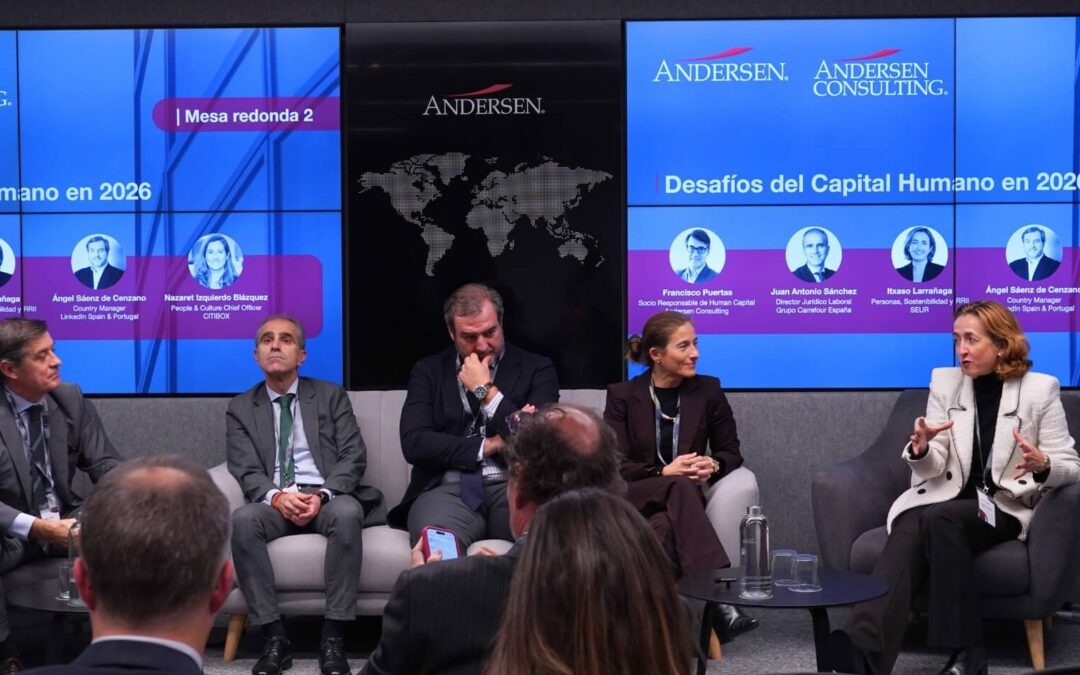
On November 24, we held "QUO VADIS 2026: Labor Strategy and Human Capital," a meeting organized by Andersen and Andersen Consulting to analyze the main labor and talent management challenges that will shape the business agenda in the coming years.
As Juan Bosco de la Rocha, Managing Partner at Andersen Consulting, pointed out, the event highlighted the need to recognize the importance of talent and human capital management, the true cornerstone of any organization.
In an environment where technological, regulatory, and cultural changes are accelerating, talent demands a leading role: it is the driving force that enables innovation, sustains growth, and strengthens competitiveness.
Summarizing such a content-rich day is an ambitious task. But, as José Vicente Morote, Managing Partner at Andersen, reminded us, quoting Nietzsche, "the easy thing is to make things complicated, and the difficult thing is to make things simple."
We took on the challenge and presented, in a clear and direct manner, the key ideas that will define the future of Labor Relations and Human Capital between now and 2026.
Absenteeism and productivity: the main challenge facing the labor market
The message was clear: absenteeism is currently one of the most serious problems facing Spanish companies, with figures ranging from 7% to 11% in some sectors, an unsustainable situation for competitiveness and daily operations.
The congestion of the healthcare system, which delays medical discharges, generates inefficiencies and cost overruns. As Pablo Tauroni, Director of Labor Relations at El Corte Inglés, pointed out: "Until the general law is changed and mutual insurance companies are authorized to discharge patients, we will continue to go round in circles. We can come up with imaginative measures, but at the end of the month, the absenteeism figures will be the same or higher."
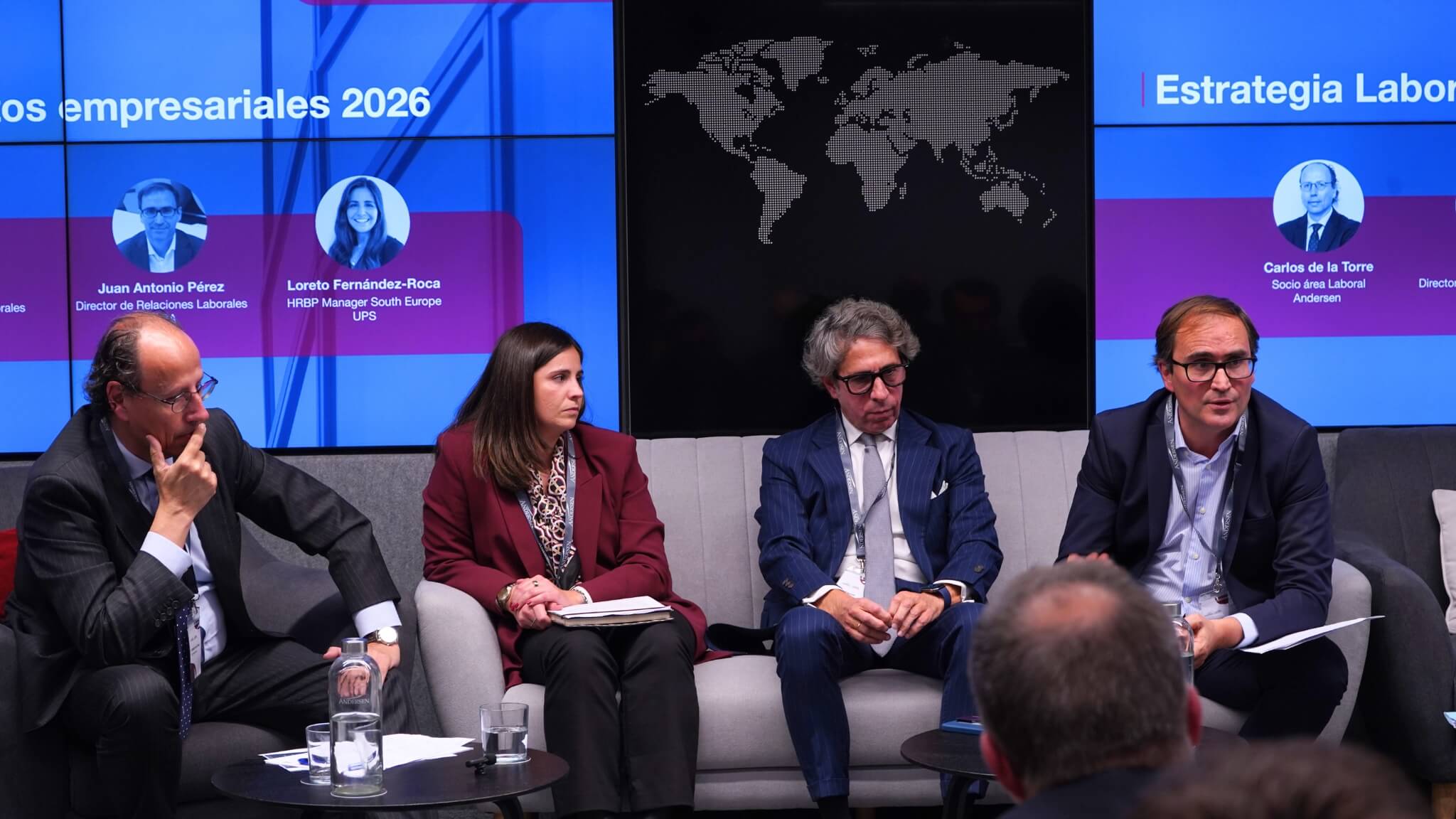
Containing absenteeism is a necessary condition for sustaining wage growth. "Wage negotiations require a balance," explained Juan Antonio Pérez, Director of Labor Relations at Alsa. "Workers are asking for increases due to rising prices, but companies can only afford them if they reduce the costs associated with absenteeism and improve productivity."
Technology and Artificial Intelligence
AI is no longer a trend; it has become an operational reality.
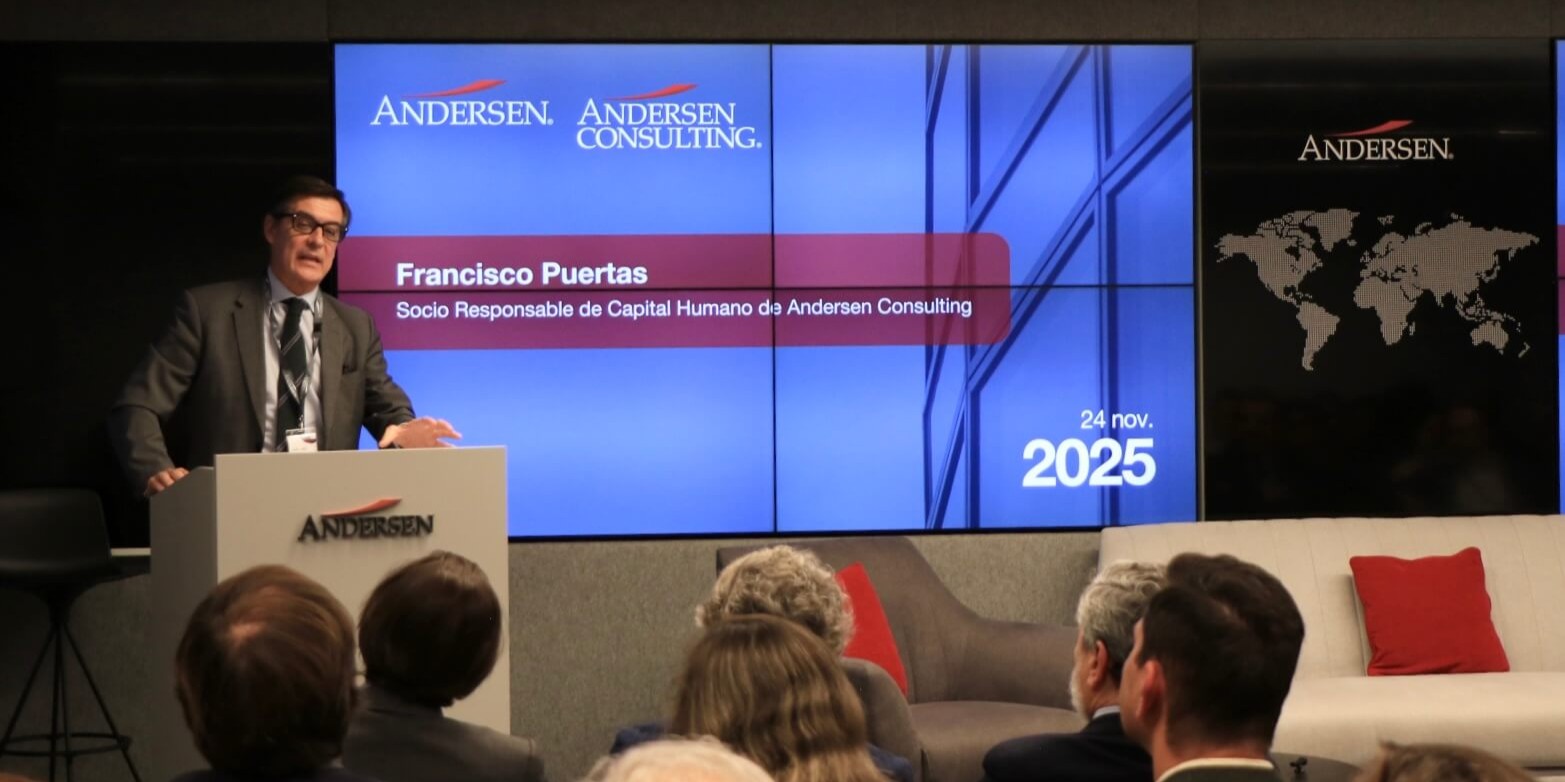
Francisco Puertas, Partner in Charge of Human Capital at Andersen Consulting, left the room with a phrase that resonated: "AI will be like PowerPoint in a few years." In other words, a natural, integrated tool for everyday use.
For Francisco Aranda, President of UNO, the technological revolution has a techno-optimistic effect:"Every major technological transformation has generated more employment, and the same will happen with AI: it will not replace talent, it will reinforce it." He pointed out that, in this context, the retraining of human capital is essential for the introduction of new technologies. That is why Human Resources and Labor Relations departments must be at the center of business competitiveness; because preparing for the future means training and developing people.
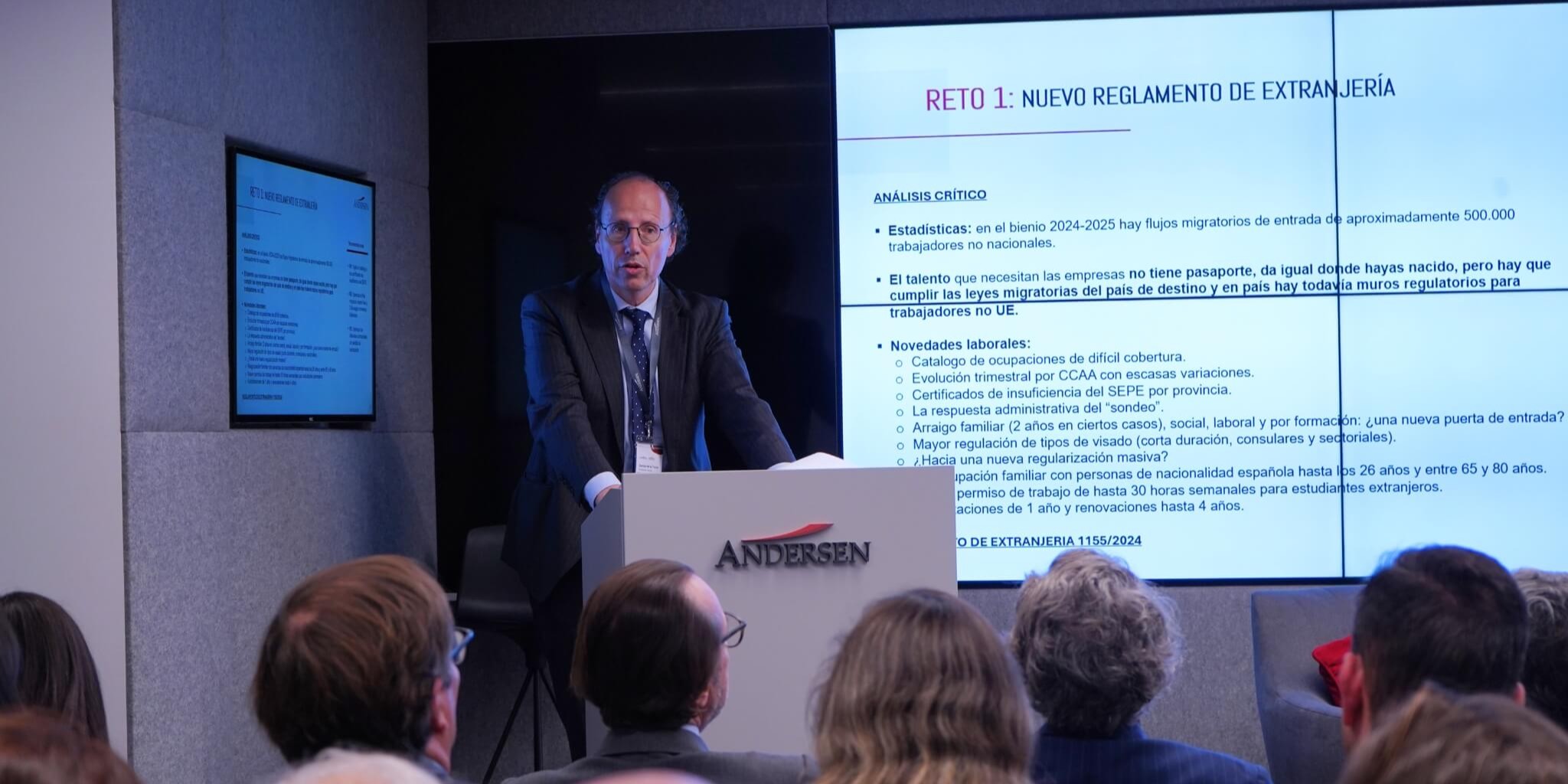
But technology is not without risks. Carlos de la Torre, Partner in the Labor Area at Andersen Iberia, stressed that the use of AI in selection, promotion, or termination processes will be considered "high risk." This implies the absence of bias, human supervision, traceability, and strict data governance.
A hyperactive regulatory framework with a high degree of uncertainty
Hyper-regulation was one of the most recurring themes. Standards in progress, changing drafts, growing demands, and very tight deadlines make up a legal environment that requires strengthening internal compliance.
Carlos de la Torre stated: "When it comes to labor strategy, the key word is uncertainty due to the proliferation of new labor regulations. The control action is clearly to try to comply with those regulations."
The multigenerational paradox and the complexity of new talent
Today, four generations with very different expectations coexist in organizations.
As Itxaso Larrañaga (People, Sustainability, and Institutional Relations at SEUR) pointed out, "each generation expects different things; if we want to have happy employees, shareholders, and customers, we need to segment, because the same policies no longer work for everyone."
Added to this diversity is the tension between speed and experience: the younger generations seek rapid growth, while professional experience takes time to acquire. In the words of Loreto Fernández-Roca, HRBP Manager South Europe at UPS, "experience cannot be accelerated; it can only be acquired over time."
The challenge is not only to offer hierarchical growth, but also growth in knowledge, aligning expectations without losing the value of accumulated experience.
Attracting and retaining talent
Juan Antonio Sánchez, Labor Law Director at Carrefour Spain, highlighted the lack of formal recognition of certain traditional trades, such as butchery, fishmongering, and baking:
“We have to appeal to the younger generations and get them interested in traditional trades. Today, experts in these fields do not have an official qualification, which makes it difficult to give these jobs prestige and value. Formally recognizing them would help us attract more talent to a sector that clearly needs people working for people.”
From Citibox, Nazaret Izquierdo added a crucial message for growing companies: "Scaling up is not about hiring more people, it's about hiring the right people." She stressed the importance of not relegating corporate culture to the background during expansion processes, reminding us that long-term success depends as much on the quality of the people as on the values and habits that are built from the outset.
Training and reskilling: learning will be working, and working will be learning
One of the strongest points of consensus during the conference was the need to invest in retraining within companies.
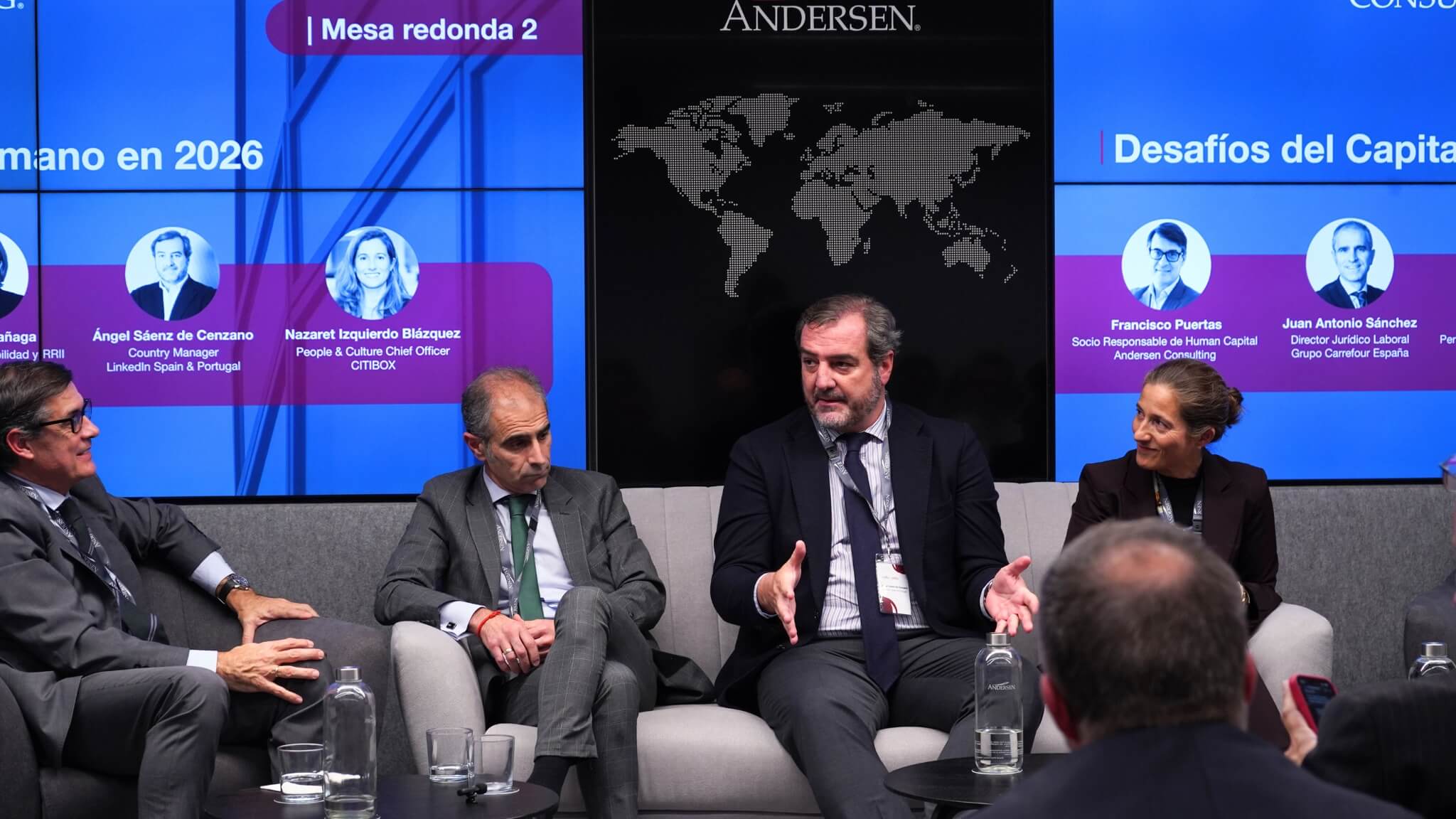
Ángel Sáenz de Cenzano, Country Manager LinkedIn Spain & Portugal, shared a surprising statistic: "50% of professionals are already training in AI... and 85% are doing so independently, without verification by their company."
This scenario encourages companies to support spontaneous learning, create traceable training programs, and connect training with daily work, transforming each learning experience into real value for the organization.
Francisco Puertas stated that "learning will be working and working will be learning,"since 70% of learning occurs in day-to-day work, 20% through interaction with colleagues and leaders, and only 10% through formal training. With the support of AI, training becomes a strategic and differentiating factor for companies.
Social dialogue and shared responsibility
Antonio Pérez, Confederal Secretary General of Fetico, closed the conference by emphasizing social dialogue as a tool for modernizing the labor market and avoiding the "poisoning" of labor relations.
His final message was a call for collaborative optimism:
"I believe that those who do things wrong are fewer than those of us who do things right. The thing is, those of us who do things right have to agree and not get discouraged. That's why forums like this are so important: they serve not only as a source of knowledge, but also as a source of encouragement."
Conclusion: connecting the strategic, the legal, and the human
Preparing for the future requires multidisciplinary work and continuing to put people at the center.
This meeting demonstrated that people strategy and legal vision must advance together, because when strategy and legal matters are connected with the human aspect, more effective solutions are designed that are aligned with the real needs of the business.
Thank you to all the speakers for their knowledge, insight, and generosity, and to the attendees for their participation. Congratulations to Francisco Puertas and Carlos de la Torre for leading such an enriching conference!
ABOUT ANDERSEN CONSULTING
Andersen Consulting is a global consulting practice offering a comprehensive set of services covering corporate strategy, business, technology, and AI transformation, as well as human capital solutions. Andersen Consulting is integrated with Andersen Global's multidimensional service model, providing world-class expertise in consulting, tax, legal, valuation, global mobility, and advisory services on a global platform with more than 44,000 professionals worldwide and a presence in more than 600 locations through its member firms and collaborating firms. Andersen Consulting Holdings LP is a limited liability partnership and offers consulting solutions through its member firms and collaborating firms worldwide.