



An analysis based on official data reveals that foreign residents account for some of the highest insurance value profiles, forcing companies to rethink their growth strategies.
Andersen Consulting, a firm specializing in solving business challenges with a focus on revenue growth, has analyzed the potential of expatriates as a lever for growth in the insurance sector in Spain, applying its own scoring and clustering model to a sample of more than 23,000 foreign residents. This approach has enabled the firm to accurately identify the profiles with the greatest capacity and predisposition to purchase insurance and value-added services.
Key findings from the study
The Andersen Consulting study highlights two key lessons that challenge traditional approaches. First, there is no single expatriate profile: this is a highly heterogeneous market, in which mass and generic strategies lose their effectiveness. Capturing its value requires real segmentation and specific adaptation of products, processes, and communication.
"It's not just about knowing the customer, but thoroughly understanding their needs, habits, and preferences," explains Juan Bosco de la Rocha, Managing Partner at Andersen Consulting. "This type of analysis allows us to design more relevant offerings that truly drive revenue."
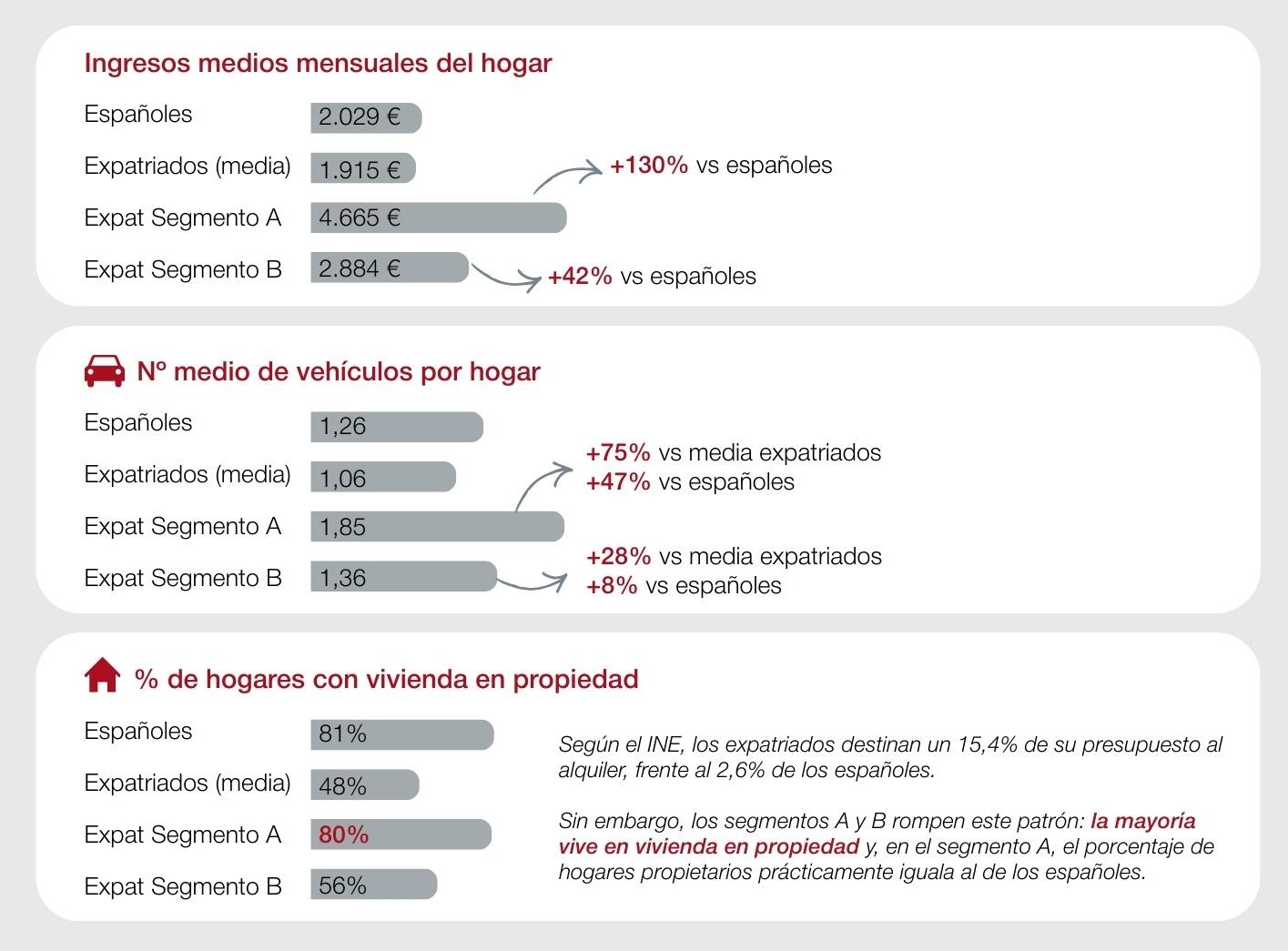
Secondly, the analysis shows that nationality alone does not determine the insurance value of a foreign resident. This is defined by a set of structural variables, including household income, educational level, family model, home and vehicle ownership, stage of life, and intention to remain in Spain.
Source: own elaboration based on the Survey of Essential Characteristics of the Population and Housing, INE.
Expatriates of greater value to the insurance sector
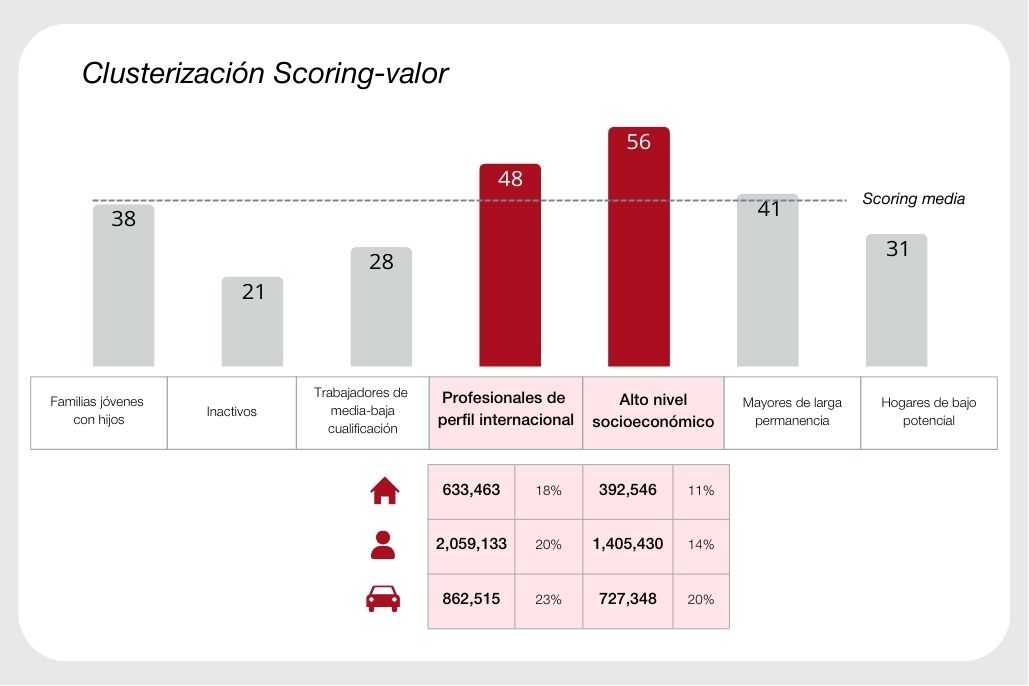
Andersen Consulting's analysis accurately identifies two strategic segments that concentrate the most valuable expatriates for the insurance sector and which, together, comprise nearly one million households with above-average insurance capacity.
The first segment (A) corresponds to expatriates with a high socioeconomic status, characterized by high incomes, home ownership, and multiple insurable assets, with a clear preference for comprehensive coverage and premium services. These profiles tend to reside in high-value urban areas or international enclaves and show a high predisposition to purchase home, auto, and health insurance with value-added services.
The second segment (B) consists of urban professionals with an international profile, generally linked to skilled sectors such as technology, finance, consulting, or global services. Unlike the previous group, their residential model is more flexible, with a greater emphasis on renting and greater geographical mobility, both within and outside Spain. These households are heavy users of digital channels and demand modular insurance products that can be easily adapted to changes in their personal or professional situation. Their relationship with insurance is closely linked to user experience, speed of contracting, and the availability of associated services such as telemedicine, mobility, and assistance with international procedures.
Source: own elaboration based on the Survey of Essential Characteristics of the Population and Housing, INE.
A market that is significant in terms of size and potential
The starting point for the analysis is a key demographic trend: according to October data from the Continuous Population Statistics of the National Statistics Institute, population growth in Spain today depends almost entirely on the arrival of foreign residents. This reality not only redefines the country's population structure, but also clearly indicates where new growth opportunities are concentrated for sectors such as insurance.
According to an analysis by Andersen Consulting, the foreign resident community—commonly referred to as "expatriates"—in Spain represents nearly 10 million people, more than 3.5 million households, and around 3.7 million vehicles, making it a prime market for insurers, both in terms of its size and the diversity of its needs and consumption patterns.
A trend that can be extrapolated to other sectors
The conclusions of the analysis transcend the insurance sector. "Foreign residents are not just an opportunity for the insurance sector," concludes Juan Bosco de la Rocha. "Theyare a growing market with high-value segments that require a deep understanding in order to be approached strategically. The methodology applied in this study is valid for any sector seeking profitable and sustainable growth."
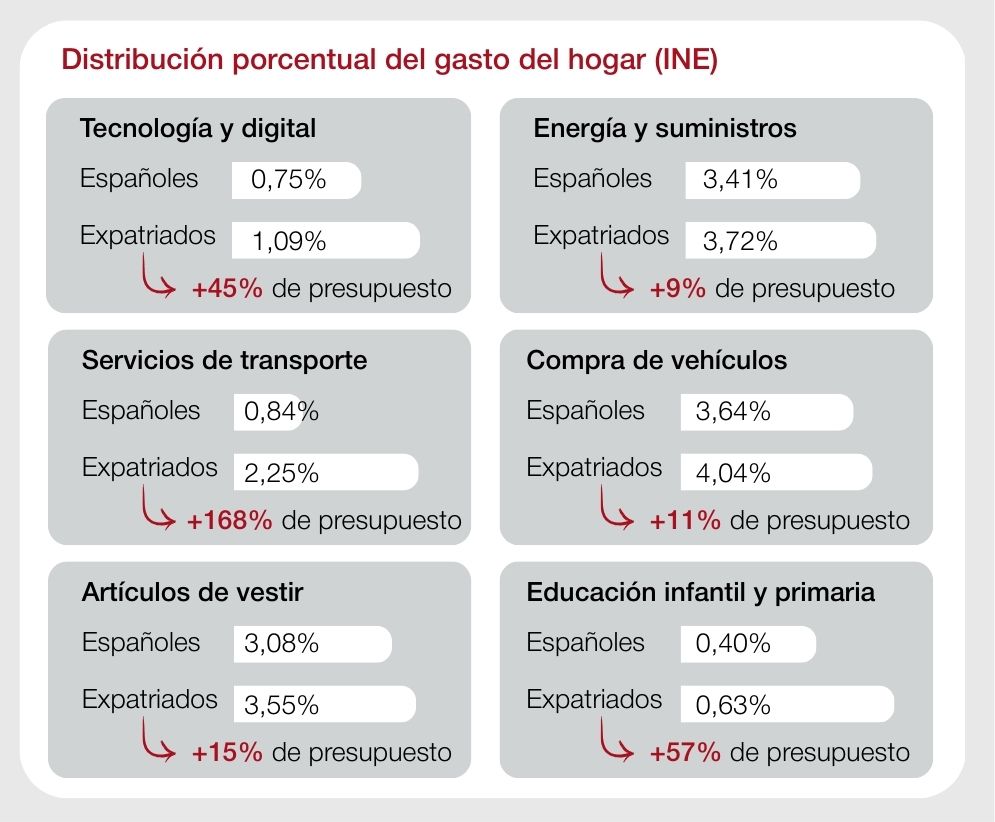
According to data from the Family Budget Survey (INE), the spending patterns of foreign households also have an impact on sectors such as energy, telecommunications, mobility, retail, and education.
Source: own elaboration based on the Survey of Essential Characteristics of the Population and Housing, INE.
ABOUT ANDERSEN CONSULTING
Andersen Consulting is a global consulting practice offering a comprehensive set of services covering corporate strategy, business, technology, and AI transformation, as well as human capital solutions. Andersen Consulting is integrated with Andersen Global's multidimensional service model, providing world-class expertise in consulting, tax, legal, valuation, global mobility, and advisory services on a global platform with more than 44,000 professionals worldwide and a presence in more than 600 locations through its member firms and collaborating firms. Andersen Consulting Holdings LP is a limited liability partnership and offers consulting solutions through its member firms and collaborating firms worldwide.