


Inflation and auto insurance in Spain: why premiums are rising and what policyholders can do about it
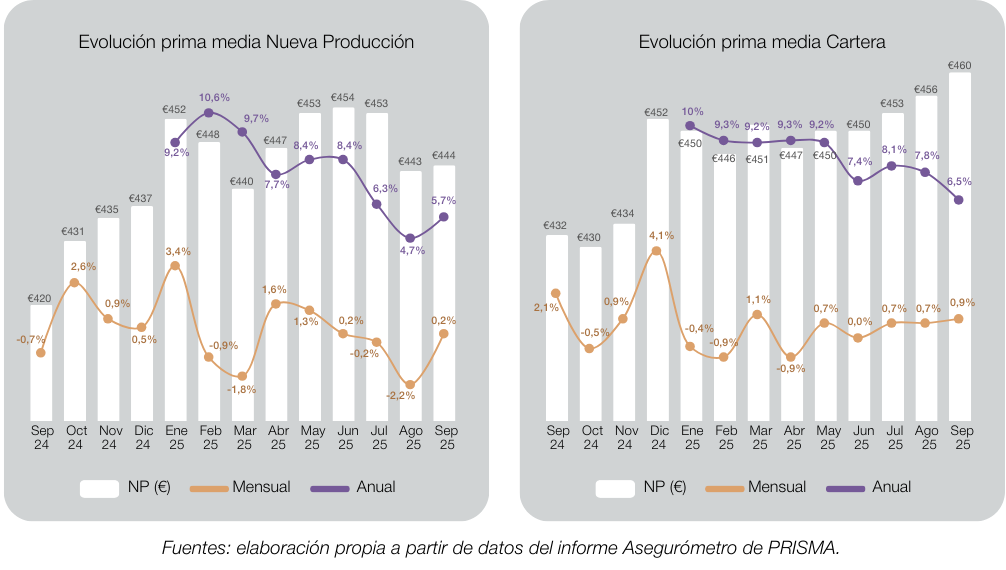
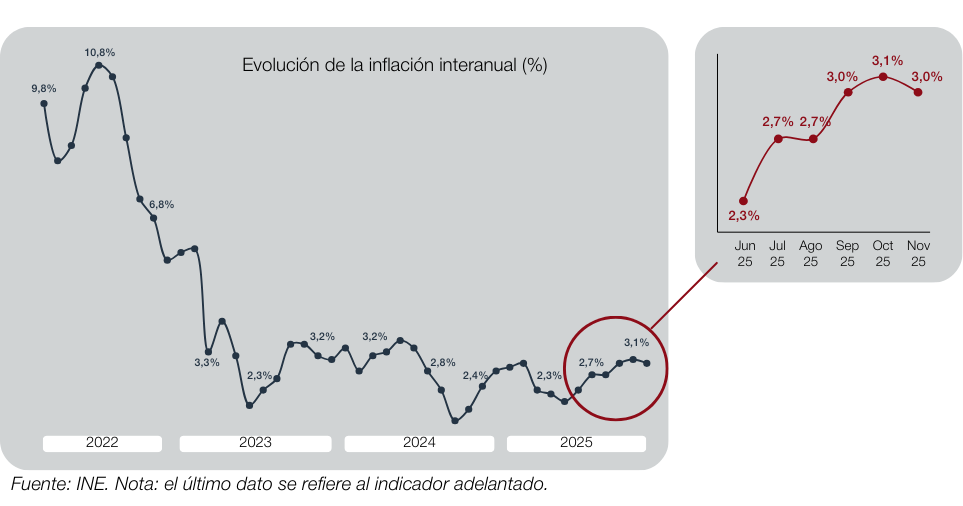
The rise in inflation in Spain is once again raising doubts about the future of car insurance. Although inflation is around 3%, the average portfolio premium grew by 6.5% year-on-year at the end of the third quarter of 2025.
Why is insurance becoming more expensive?
When inflation rises, insurers face a real increase in repair, parts, and labor costs. But the increase in premiums cannot be explained by this factor alone: it is due to several factors that steadily raise the cost of the insured risk.
On the one hand, new vehicles are incorporating more and more technology (sensors, advanced assistance systems, or components specific to electric vehicles), which makes repairs more complex and costly.
On the other hand, the aging of the vehicle fleet adds pressure: almost half of the vehicles in circulation are over 15 years old, which increases breakdowns, roadside assistance, difficulties in finding spare parts, and the likelihood that a serious accident will result in a total loss.
Added to this is the +2.8% increase in the Traffic Accident Scale in 2025, which raises the compensation received by victims and, therefore, the costs borne by insurers.
The sum of these factors puts direct pressure on the sector's margins. When claims cost more than expected, adjusting prices, coverage, or deductibles becomes essential to maintain technical balance.
Context: years of contained prices and margins at the limit
For decades, the sector operated with low inflation and intense competition, which pushed prices down. The pandemic, geopolitical tensions (such as the war in Ukraine), and supply chain disruptions broke that balance.
Some companies ended up operating with negative technical margins, spending more on claims and costs than they were earning in premiums. The correction could not be postponed and led to aggressive price increases and the expulsion of unprofitable customers.
Between 2019 and 2025, auto insurance increased by 37%, compared to 21% for the overall CPI. This is not only a reflection of recent inflation: it also highlights the need to correct prices that had been lagging behind for years.
What is happening today with auto insurance?
According to studies by Andersen Consulting, the average premium continues to rise, although the rate of growth is beginning to stabilize. Following the sharpest increases in 2024, the year-on-year variation now stands at around 6%, according to the latest PRISMA Asegurómetro report.
"Car insurance prices continue to rise, but not as dramatically as before. The sharpest phase of the correction is behind us, and what we are seeing now is a more stable and sustained adjustment," explains Juan Bosco de la Rocha, Managing Partner at Andersen Consulting and Head of the Insurance Sector in Spain. He adds: "The increases will tend to level off, but we will not return to previous prices. The current levels are here to stay."
"Car insurance prices continue to rise, but not as dramatically as before. The sharpest phase of the correction is behind us, and what we are seeing now is a more stable and sustained adjustment," explains Juan Bosco de la Rocha, Managing Partner at Andersen Consulting and Head of the Insurance Sector in Spain. He adds: "The increases will tend to level off, but we will not return to previous prices. The current levels are here to stay."
This slowdown in the rise of premiums was accompanied by a more favorable economic outlook. After the inflationary peak that began in 2022, price increases began to moderate and inflation became more controlled, which helped stabilize the average cost of claims.
In fact, Andersen Consulting studies began to show signs of competitive recovery among insurers: some companies began to lower prices on new policies, indicating that the market was regaining some momentum.
However, the spike in inflation in October, reaching its highest level of the year, has set off alarm bells for the sector. This spike could slow down, or even reverse, the incipient shift toward more competitive prices.
The key now will be to closely monitor what happens in the coming months: will insurers raise prices again to protect their margins? Or will they continue to compete with lower rates?
What can the insured do to protect themselves?
With prices on the rise, it is advisable to take proactive measures to avoid surprises and maintain adequate protection:
- Review the policy annually to ensure that the coverage remains appropriate for the actual value of the vehicle.
- Adjust coverage according to actual needs, eliminating unused benefits.
- Evaluate deductibles that reduce the premium without compromising essential protection.
- Compare options carefully, focusing on coverage and service quality, not just price.
Accurately adjusting premiums: the critical role of data
In an environment where insurance costs are rising and risk management is becoming more complex, having reliable data and knowing how to interpret it allows insurers to anticipate costs, accurately assess risks, and understand changes in customer behavior. This makes it possible to adjust premiums accurately, maintain sustainable margins, and compete strategically.
In this context, competitive intelligence is no longer an optional advantage but an essential requirement: it ensures that insurers remain profitable and that policyholders have access to fair and rigorously calibrated products.
ABOUT ANDERSEN CONSULTING
Andersen Consulting is a global consulting practice offering a comprehensive set of services covering corporate strategy, business, technology, and AI transformation, as well as human capital solutions. Andersen Consulting is integrated with Andersen Global's multidimensional service model, providing world-class expertise in consulting, tax, legal, valuation, global mobility, and advisory services on a global platform with more than 44,000 professionals worldwide and a presence in more than 600 locations through its member firms and collaborating firms. Andersen Consulting Holdings LP is a limited liability partnership and offers consulting solutions through its member firms and collaborating firms worldwide.