We shouldn't have had to go through a pandemic to realize something as obvious as that remote working is here to stay. The term "working from home" can be found in what many consider to be Alvin Toffler's prescient work, The Third Wave, a title that, in the context of the pandemic, has connotations that are far from dreamlike, but which referred to a new era of decentralized, non-massified, and personalized production, as opposed to the "first wave" (agricultural) and "second wave" (industrial).
"When we wrote that inThe Third Wave,"Toffler would say years later in a televised interview, "predicting that there would be more work in homes, it was considered lunatic, and the New York Times ran a front-page article saying it was futuristic nonsense (...) The Japanese government has created a policy that by 2010 [note, 2010] expects to have 1 in 5 workers working from home (...) I remember presenting that idea for the first time in Japan, and they said, 'You can't, the houses are too small, people aren't used to it!' And now it's official government policy to move a fifth of economic activity into the home."
In fact, the idea has even earlier precedents. In 1976, a research group at the University of Southern California, led by Jack Nilles, published a study assessing the cost of commuting to offices and predicted that technology would enable a more efficient economy through what he calledtelecommuting. Even seven years earlier, Alan Kiron, a scientist at the US Patent Office, had written inThe Washington Post about how the integration of computers and communication tools would change life and work thanks to what he called "dominetics," a combination of the words "domicile," "connections," and "electronics." The term may not have caught on, but the idea did.
More than 50 years after that initial formulation, and more than 40 years after Apple's announcement outlining these scenarios, the shift to remote working forced by the COVID-19 pandemic has been achieved, but not without considerable effort. But once we have experienced its advantages, it will be difficult to avoid a large-scale upheaval, not only in terms of employee-office relationships, but also, and probably, in terms of ideas about urban planning, urban life, and commuting. This goes far beyond thetouchless society, as a temporary reality imposed by preventive measures.
That is why, knowing that this transformation is here to stay, BRAINTRUST has put together a dozen basic recommendations for tackling the challenges posed by this change, which could have been gradual, for which we should have been prepared, and which has caught us off guard overnight with a few unfinished tasks. These recommendations are listed below:
- You're at home, but you're working. So the concept of pajamas and slippers or sweatpants and socks isn't going to help you. It's about seeing yourself, even in aspects you might consider superficial, as being fully active. Get dressed. What's more, dress appropriately. If a robe wouldn't be your best outfit at the office, there's no reason to think it could be your best ally in productivity.
- It will take many days, many hours, and a lot of dedication. Sitting on the sofa in front of the television or lying in bed with your computer will not only affect your productivity. More importantly, and now that we are being shaken by a pandemic we have even more reason to say so, it can affect your health. Both physically, forcing you to watch your back, and mentally: differentiate between leisure and work spaces, as combining them may not be the best idea.
- A good desk, a comfortable and tidy workspace, and a good source of lighting, preferably natural, are essential. Calculate how many hours a year you will be spending there. Do you need any additional information? Recreating an office environment is what will help you the most.
- Set working hours, both for yourself and for others in relation to you. Just because you are at home and others are at their homes does not mean that you and they are connected 24/7/365. Flexibility does not mean, and should not mean, permanent availability.
- How long did it take you to get to the office? Don't use that time to oversleep or to "call it a day" early. Use it to take breaks during your workday.
- Just because you won't be physically with your coworkers doesn't mean you should forget about them. Staying in touch using videoconferencing tools will not only be necessary in most cases for efficiency reasons, but it is also recommended that you use them because personal relationships are crucial for maintaining perspective and avoiding stressful situations.
- Being at home is neither a reward nor a punishment. It shouldn't even be considered exceptional because the circumstances are exceptional. It's something that sooner or later was going to become normal, and in some cases already was. It's just that its large-scale adoption has been brought forward. The best way to ensure that working from home is not a source of frustration, and that it does not fuel false expectations, is to prioritize tasks in the same way you would in an office, but with the advantage that interruptions will be less frequent and, moreover, probably scheduled. Use this to your advantage.
- However, could there be anything more frustrating than having radically changed yourmodus operandi and having to add all these points to your day-to-day professional routine? Yes: adapting to and living with the provisions of the "new normal," only to find that, due to an oversight, a mistake, an omission, or simply bad luck, you suddenly have to repeat all your work because "it has been deleted," "it has disappeared," or similar expressions that we have all uttered at some point. Save your work persistently, and don't forget to make backups to save yourself a few minutes of time.
- Where once you saw the world through a small corporate screen with limited time, now it seems like you have the world at your feet, right? Emails, social media, and the vast ocean of information, education, and entertainment that is the internet. And then there are WhatsApp messages, which you now have complete control over with no time limits. How could you say no? Well, don't say no, but tell all of that what time you're going to give it your attention: email at 9 a.m., 1 p.m., and 5 p.m., not when it arrives; WhatsApp at 11 a.m., 2 p.m., and 6 p.m., not when your phone alerts you; social media with your 10 a.m. coffee and before you "close up shop." The more you tame distractions, the more you will benefit from and enjoy them.
- You have an advantage over everyone who is not teleworking: you will most likely not have to spend tedious days wearing a less tedious mask, plus a spare one just in case. That reality should not turn into a false sense of total security. You are still living in the midst of a pandemic, and you must continue to bear this in mind when you leave your home, always following the guidelines set out by the authorities so that we can successfully tackle this threat together.
- All this dedication can come to nothing if it is not compatible with the people you live with, if you live with anyone. If that is the case, your housemates must understand that your time, routines, space, and obligations deserve their respect, just as theirs deserve yours. If you replace the usual interruptions at the office with the equally frequent ones at home, you will have gone from bad to worse.
- Finally, saving time on commuting has a consequence that you should not overlook: the minimal physical movement you used to do between home and the office forced you to get a minimum amount of exercise. One of the mistakes of the "old normal" was our tendency to lead excessively sedentary lives. Now, as long as no highly exceptional situations arise, you should consider doing some physical exercise more than ever. You have the whole day to plan it. Working from home does not mean working longer hours to do the same thing; it means organizing your working time better to get more out of the rest of the day. Don't neglect your health. Today, more than ever,a healthy mind in a healthy body.
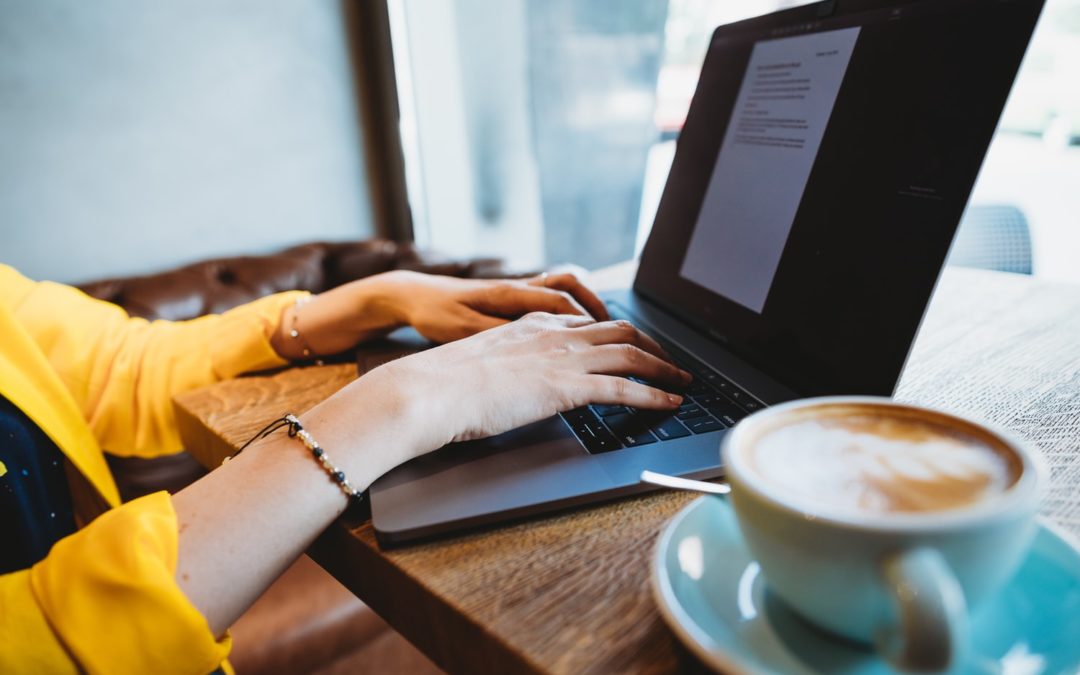
Image Photo by Alizée Baudez on Unsplash
Text: APPP/EKMB/BTCS