
Our Managing Partner, Juan Bosco de la Rocha, recently publishedan opinion piece questioning how it is possible that in the 21st century there are 4 million registered vehicles in Spain without insurance. Despite being a completely illegal practice with serious implications, it is disturbing to see the number of drivers who choose to ignore this legal obligation.
According to data provided by the DGT, at the end of 2022, the number of vehicles in Spain reached 37,514,305. However, it is concerning that only 32,906,794 of those vehicles are properly insured. In other words, approximately 10% of all vehicles in the country are in an illegal state. This situation poses a significant risk to both the drivers involved and other road users, with important legal and financial implications.
It is important to note that the legislation is clear on this point, requiring that "all owners of motor vehicles that are habitually parked in Spain are obliged to take out and maintain a valid insurance policy."
Apart from the legal and even criminal consequences that this situation may have for drivers who drive without insurance, we believe that from a business perspective, auto insurers may be able to take advantage of this situation and thereby help reduce the problem.
Thus, beyond the strategies to identify, penalize, and prevent the circulation of uninsured vehicles that must be implemented by the Administration, including awareness and education campaigns that may be launched by the Ministry of the Interior or, more specifically, by the DGT, insurance companies could undoubtedly be part of the solution and contribute to minimizing the problem by applying their usual marketing tools to capture this type of vehicle.
And how do we think they could do this? Well, based on our experience in preventing customer churn and recovering customers in the insurance world, it occurs to us, for example, that these companies could make an effort to identify on their retention platforms those customer losses that are actually "vegetative insurance cancellations,"that is, those that correspond to policyholders who decide to cancel the insurance on that vehicle permanently and who, therefore, not due to a change of insurance company motivated by the search for better conditions or resulting from a transfer of the vehicle itself.
If companies are able to intelligently identify these profiles, they can then cross-reference these vehicles with those registered with the DGT (Spanish Traffic Authority) to determine whether they have actually been officially deregistered or whether, on the contrary, they remain in circulation clandestinely.
This would enable companies to identify which and how many vehicles have fallen into this irregular situation and propose actions to recover them through specific promotions, ad hoc insurance products, or special actions aimed at this type of loss.
In addition, they could analyze the characteristics of these uninsured vehicles (age, make, model, province, history of ownership transfers, etc.) to obtain archetypes of this low-value profile and search for twins among the DGT fleet that are part of the approximately 4 million uninsured vehicles that exist in Spain, and thus design broader marketing strategies aimed at this interesting niche market, which would undoubtedly contribute to reducing this significant problem.
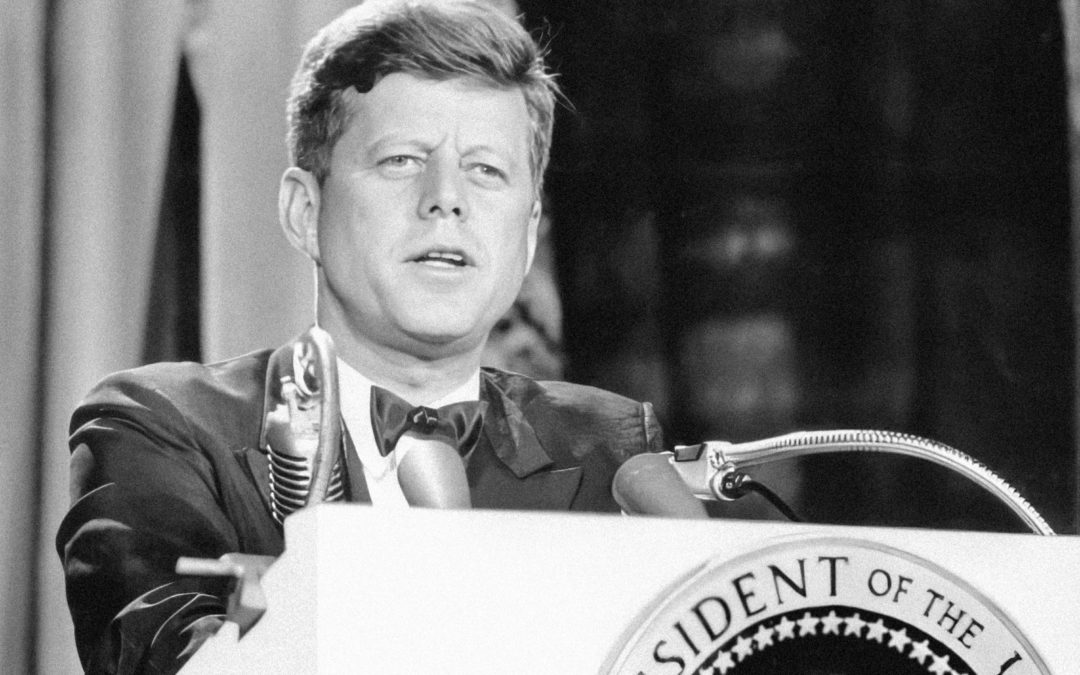
Referring to John F. Kennedy and his famous inauguration speech as President of the United States in January 1961, whenhe said,"Ask not what your country can do for you, but what you can do for your country," it would now be appropriate to call on insurance companies to ask themselves what the government can do to solve this important problem, but rather to ask themselves what they can do to help minimize the number of uninsured motor vehicles, since their involvement in the solution would also allow them to reap substantial rewards, both in terms of reputation and financially.
Photo by Florida Memory on Unsplash