
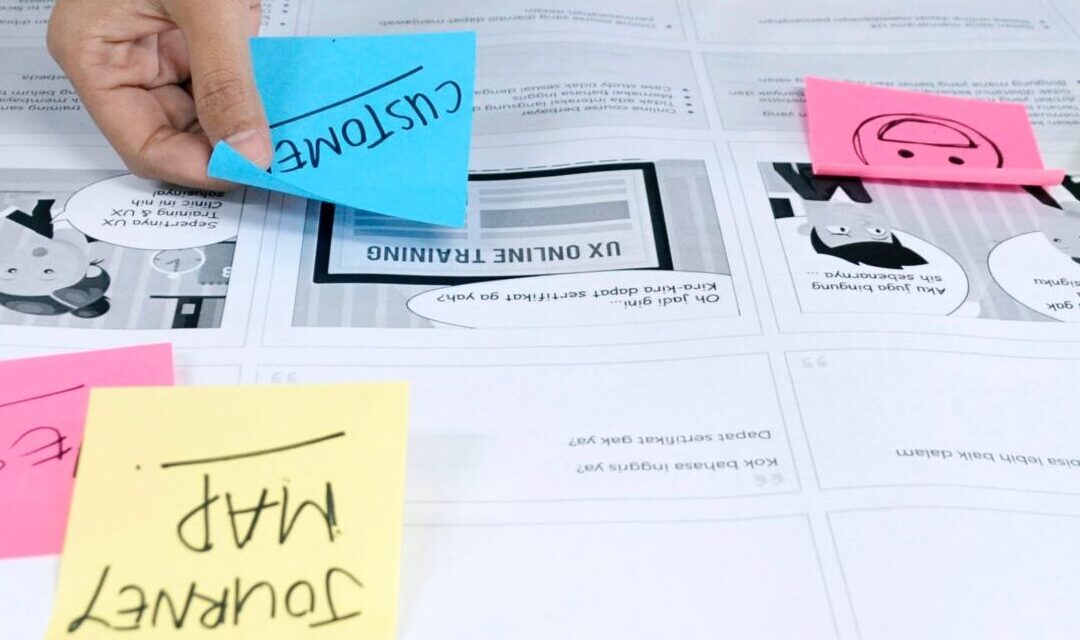
Nowadays, understanding the customer journey (CJ) has become a necessity for all companies in the industry.
Customer journeys are the different stages and touchpoints that consumers go through when interacting with a brand or company. These journeys can vary greatly in size and scope, from a simple online purchase to a long-term relationship with a brand. Customer journeys are not static models, but rather dynamic constructs that are constantly evolving.

Example of a customer journey with all possible touchpoints before, during, and after the purchase
A customer journey serves as a strategic tool that can reveal a wealth of information about customer needs and behaviors. In this article, we will analyze the nature and impact of journeys on the customer experience and how organizations can apply this knowledge to improve their business strategies.
Each customer journey is made up of individual experiences, and every interaction, no matter how small, can have a significant impact on the overall customer experience. Critical moments in a journey are not only those involving high interaction, but also those that generate strong emotions and memories, thus shaping the customer's overall perception of the brand.
There are different types of customer journeys, each with its own set of goals and challenges. The various types of journeys, from the consideration process to post-purchase, offer a unique opportunity for customers and the company, providing them with sufficient knowledge to design more personalized and effective experiences.
Likewise, the lessons learned from customer journeys can inform and enrich the company's strategy, service design, and process implementation. These insights are essential to ensuring continuity in the customer experience and meeting customer expectations as they evolve.
On the other hand, for an organization to transform itself, it is necessary to adopt a framework focused on the customer experience. This involves integrating the knowledge gained during the analysis of the journeys at every level of the organization, from senior management to customer service.
As success stories with the use of this tool, we can point to some recent examples that have demonstrated its effectiveness:
- Automotive: with a leading brand seeking to differentiate its customers' experience at the point of sale, we developed different customer journeys for each customer segment, aimed at systematizing and personalizing marketing at the dealership.
- Healthcare: our client, a manufacturer and distributor of equipment with a long and complex purchasing decision process, managed to improve its conversion rate through a customer journey strategy that condensed the best practices of its entire sales force.
- Construction and decoration: a manufacturer and distributor of products managed to increase brand awareness and profitability per B2B customer by completely overhauling its sales and after-sales process, building on a customer journey approach and redesigning the customer experience at every touchpoint.
In conclusion, understanding every point of contact between the customer and the company is essential for any business to thrive in today's competitive market. By focusing on customer experiences and perceptions, brands can develop more effective strategies, improve customer satisfaction, and ultimately drive long-term success.
We invite you to share your experiences or questions about customer journeys in the comments.
How has this approach impacted your organization or your perspective on the customer experience?
Photo by UX Indonesia on Unsplash