
What is the driving force behind launching or revamping a program? Fundamentally, major changes in consumer behavior and consumption trends. The incursion of the digital world into our lives over the last ten years, customers (buyers) spending more and more time on their cell phones and using various digital channels. This makes it much easier to reach consumers, but also more difficult to capture their attention, as there are countless brands on the market doing similar things. The distractions are endless!
We have reached a point where we have a huge amount of data and information at our disposal, but the question is : What data do I need, for whom, and for what purpose? Whoever solves this equation will achieve success.
In many cases, companies will have to develop two types of programs in one. Omnichannel is key, as it provides the solution to an existing problem: the gap between digital natives, mid-digital natives, and non-digital natives. It is not just a question of age, but of understanding new technologies.
In some cases, it will probably be necessary to maintain more traditional elements such as "paper registration forms" in order to respond to the large number of people who have not entered the digital world but who have the financial capacity to purchase certain products: hotels, flights, restaurants... Do we want to sacrifice these customers simply because they don't know how to open an email? Is it necessary for all your transactions to be carried out by your children or grandchildren, and in many cases even by a stranger? Loyalty implies trust, and in many cases these customers distrust the new model based exclusively on technology and not on the "human" aspect.
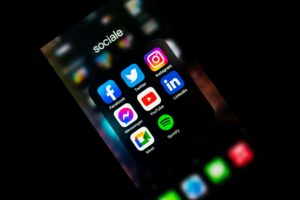 We have reached a point in some sectors where not having a mobile device excludes you from everything related to personalized offers. No one finds promotional brochures in their mailbox anymore. In the travel world, this customer will feel more comfortable going to a travel agency that will offer them the best option and will end up booking through a non-centralized channel (TTOO package), which is the opposite of what many companies in the travel sector currently want. A loyalty program will provide you with enough information to assess how and what to offer this account holder.
Incredibly, some companies that opted for a digital customer service model and incorporated technologies that predate ChatGPT have been forced to reactivate their call centers and staff them with more personnel. We are at a crossroads where technology is the basis for evolution, but people still need to be recognized, either in person, which is what older generations demand, or digitally, which is what younger generations demand.
Loyalty programs attempt to cover that part that regular purchases do not address. AI can be a great tool to help achieve that personalization, but care must be taken because perceptions are also part of personalization, and those are only discovered when dealing directly with the customer.
The so-called Next-Gen view loyalty and personalization differently, but ultimately what they want is to be recognized, hence the success of the well-known "influencers." In these cases, mobile phones are their weapon for relating to the world, and they find it difficult to communicate face-to-face, so programs must move and evolve towards environments such as Instagram and TikTok. Examples of actions that are changing the way everyday activities are promoted include the movement known as BOOKTOKERS (TikTok). This is a new way of promoting reading based on comments posted on TikTok by young readers themselves. According to some statistics from 2022, this channel has increased book sales. In the specific case of Amazon, sales of books promoted by "reading influencers" or Booktokers increased by more than 20%.
Image from Freepik / Photo by Piotr Cichosz on Unsplash