
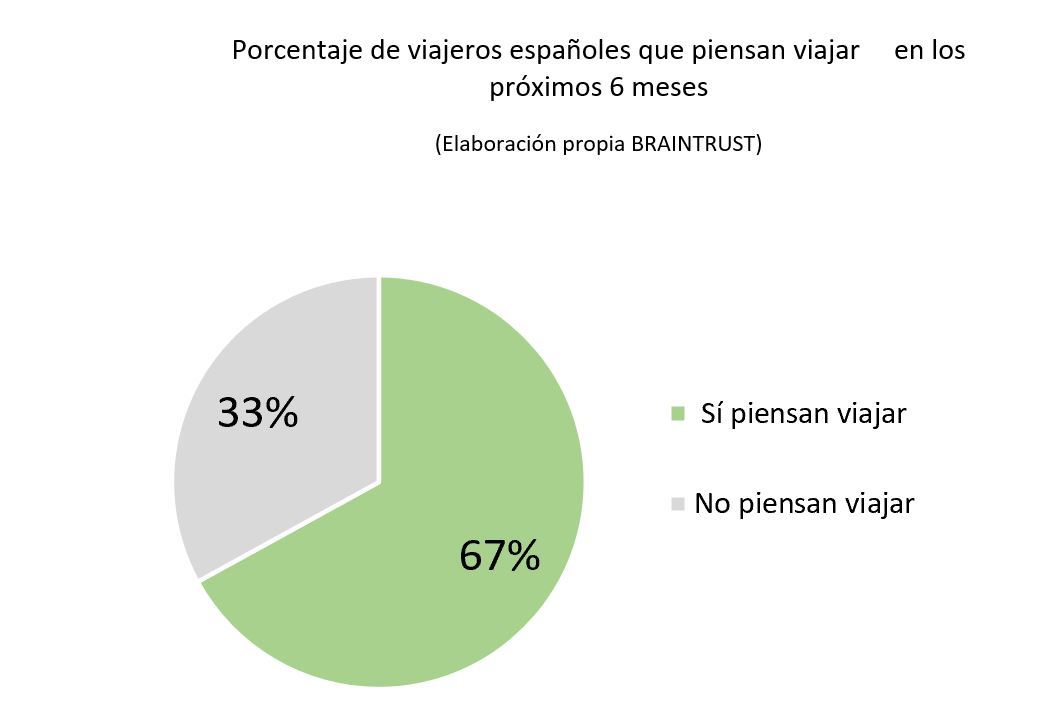
67% of Spaniards intend to travel in the next six months, of which 49% want to travel abroad, if the pandemic is brought under control.
BRAINTRUST, in a new wave of its Tourism Barometer, analyzes how both domestic and medium- and long-haul destinations are recovering for Spanish travelers, and what travel intentions exist for the next six months. The data shows that the moment we thought was so far away a few months ago, when we could once again enjoy destinations beyond our borders, seems to have arrived and that we could soon reach (if there is no further spread of the virus) pre-pandemic figures in the outbound vacation segment.
Spanish destinations recover 89% of domestic travelers compared to 2019, international destinations 22%
Despite the fear many travelers have about returning to their pre-pandemic travel habits, the truth is that the beginning of the recovery is becoming apparent.
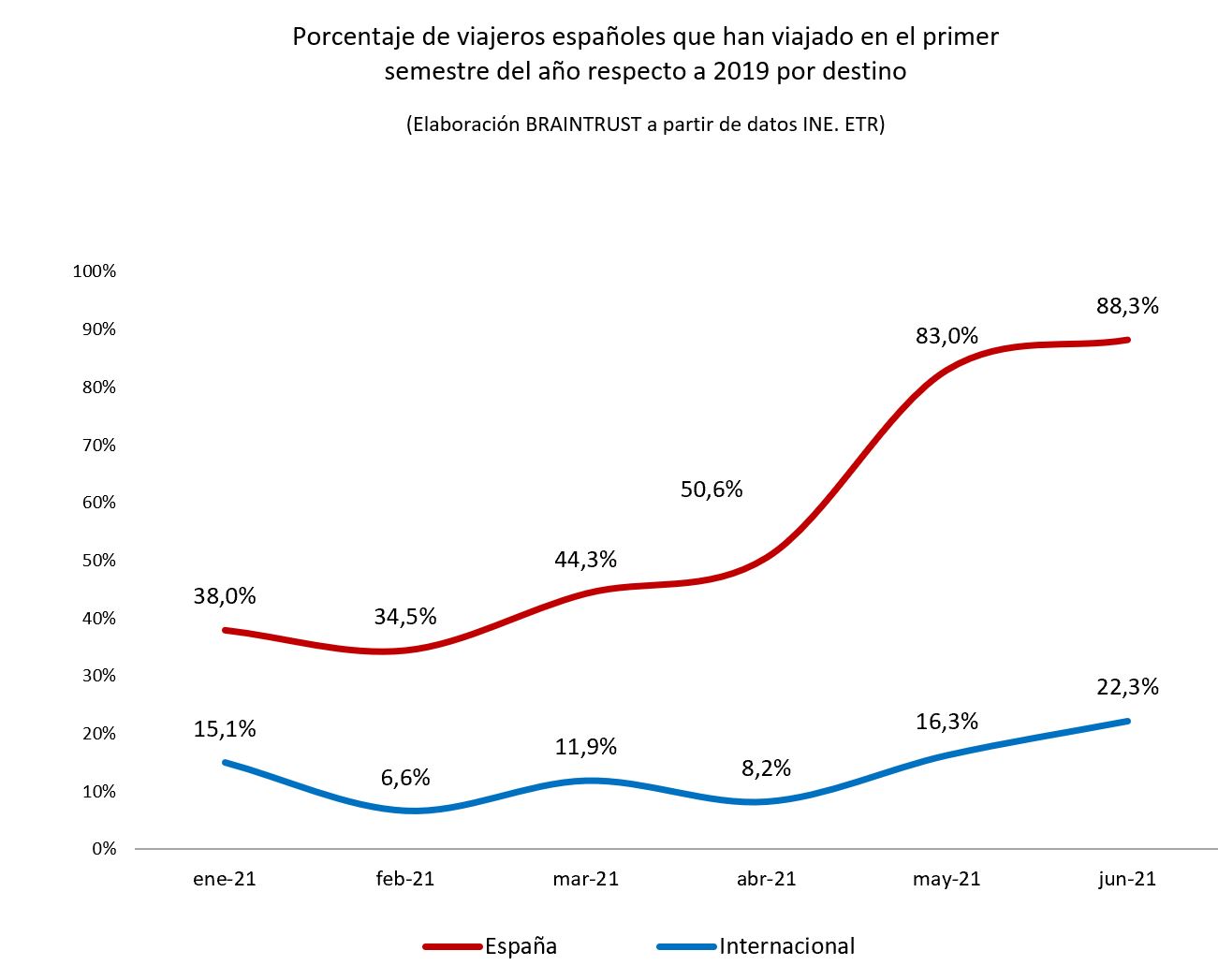
Domestic travel by Spanish citizens in the first half of the year reached nearly 88% of the trips made during the same period in 2019, when COVID-19 had not yet disrupted our lives. This trend between January and June represents a 132% increase in domestic travel.
On the other hand, and although to a much lesser extent, given the circumstances of border closures, vaccination passports, and a greater perception of insecurity, medium- and long-haul destinations are also beginning to see signs of recovery, regaining 22% of their visits from travelers from Spain in the first six months of the year and growing by 47.8% over the year.
The battle for domestic destinations begins, as Spanish travelers lose their fear and start traveling abroad.
Data from the BRAINTRUST study indicates that 67% of Spaniards are willing to travel in the next six months.
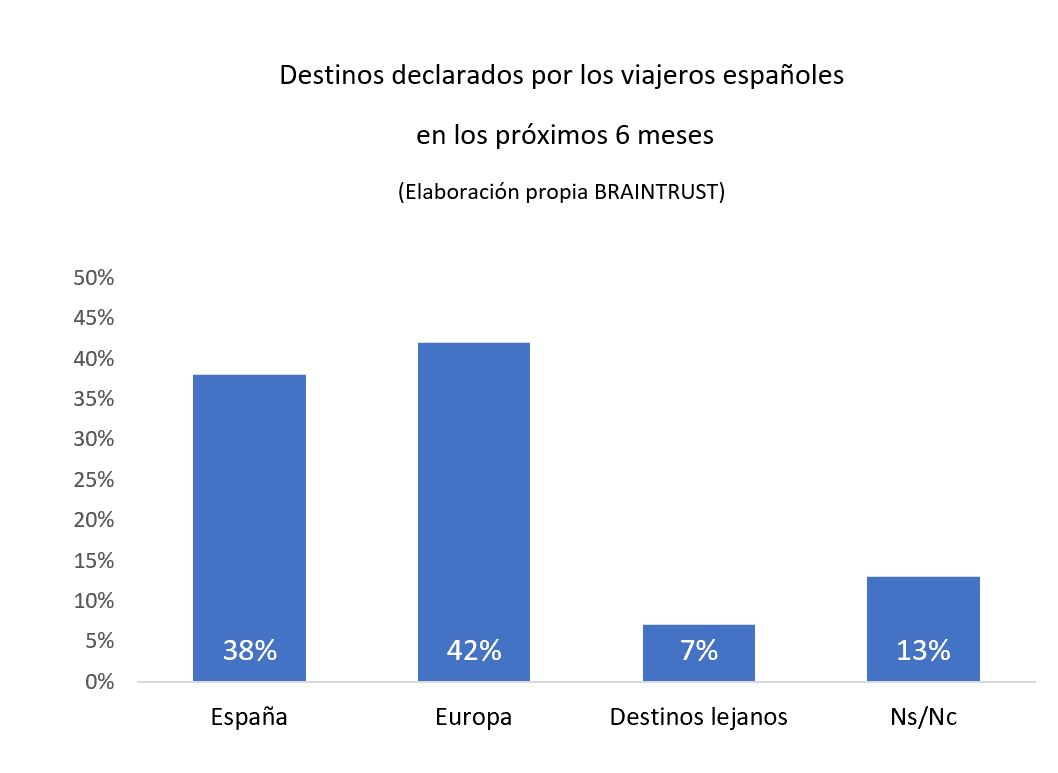
Therefore, almost three-quarters of Spaniards are thinking about traveling, and of those, 49% are eager to travel abroad, with 42% to Europe, 7% to more distant destinations, while 38% plan to stay in Spain, and 13% are still unsure where to go. There is no doubt that the pandemic has curbed people's desire to travel the world, and now it has accelerated it, which, combined with accumulated savings, is driving these encouraging figures.
In this context, a battle is expected between domestic destinations which, faced with the impossibility of domestic tourists traveling abroad, have enjoyed "borrowed travelers" who, before the pandemic, traveled to other international destinations. Given this situation, it is worth noting that, after the summer, Spaniards will opt for small to medium-sized urban destinations with a wide range of experiences and cultural activities, with strict safety protocols in place to ensure peaceful getaways after so much uncertainty during COVID-19.
Destinations must therefore offer experiential travel with high levels of safety and flexibility, given the possible emergence of new outbreaks or a rise in infections (such as those currently being seen in Europe), which is the main fear expressed by Spanish tourists for the coming months. They continue to support appropriate health measures such as the use of masks, social distancing, and reasonable capacity limits.
For Ángel García Butragueño, Co-Director of the Tourism Barometer and Director of Tourism at BRAINTRUST, "The time for recovery has come, provided there are no setbacks in controlling the pandemic. Spaniards are expressing a very notable intention to travel in the next six months, with an uncontrollable desire to explore new horizons after being forced to remain within our borders for so many months, and the gradual loss of fear. The time is coming for destinations to fight fiercely to attract travelers eager for new experiences, combined with safety and flexibility, with all countries investing in sustainable tourism models. Spain must rise to the challenge by transforming its sun-and-beach model, expanding its offering and giving it more experiential attributes. Conscious, green, and digital tourism is emerging, with European Next Generation funds facilitating the transformation of destinations, a unique opportunity that we cannot miss as a country if we want to remain world leaders for both domestic and international travelers.
Tour operators and travel agencies face a unique opportunity to regain their role as advisors
Those interviewed by the BRAINTRUST Barometer state that, since the COVID-19 pandemic, they will use travel agencies more, reaching a penetration rate of over 40%. Their reasons are simply that agents can offer guarantees of safety on their trips, as they have the knowledge, experience, and tools to make travel a unique, peaceful, and safe experience. Now, people are looking for different types of trips, beyond the usual flight and hotel packages, and want to add new concepts to their trips, such as gastronomy, entertainment, leisure, nature, sports, and wellness, giving tour operators the opportunity to create new, truly distinctive products and services that are not mass-market and can be customized for each customer according to their objectives.
According to José Manuel Brell, Co-Director of the Tourism Barometer and Partner responsible for Quantitative Studies and Models at BRAINTRUST: "It seems clear that the tourism industry has weathered the worst and is on the road to recovery. The real challenge is to restore demand while ensuring health and safety, and at the same time transforming the sector with a focus on sustainability, innovation, and profitability. Travel agencies and tour operators are at a turning point, where they must transform themselves to remain relevant in the eyes of travelers who, despite the rapid advance of digitalization and e-commerce, seek expert advice in a world that is more uncertain and unpredictable than before the pandemic."
The progress of vaccination programs and the European Digital Green Certificate are key to overcoming fear.
Finally, Spanish travelers feel confident about the vaccination rate (full course) in our country, which is close to 80%, and on average in our neighboring countries, which is close to 65%. The low incidence of infections after the summer—although with an eye on countries where the virus has surged again—and the use of the European digital COVID certificate (77% support it without reservation) suggest that the worst is over, and there is a widespread intention to travel after almost a year and a half of living "locked up" within our own borders.